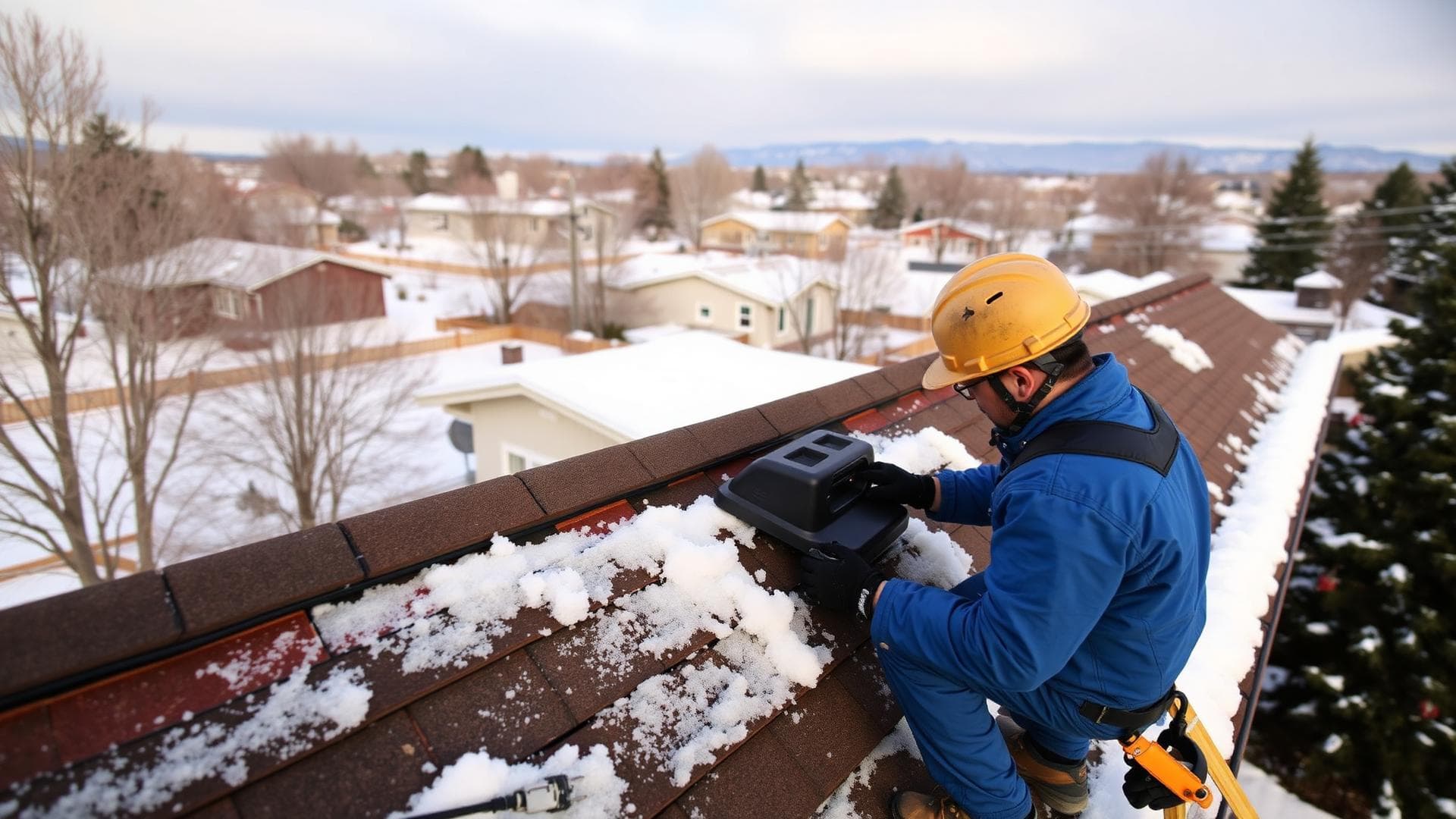
After a Colorado winter, your Lafayette roof needs a close look before hail season arrives in May. Freeze-thaw cycles stress flashing and shingles, ice dams trap moisture under eaves, and downslope winds lift tabs. A spring inspection catches small problems before they turn into insurance claims or emergency leaks.
Colorado's 300-plus sunny days and high-altitude UV age shingles faster than the manufacturer's rated lifespan. Add in Lafayette's winter temperature swings and you have a recipe for accelerated wear. Here's what to check and when to call a pro.
Why Does Colorado Winter Damage Roofs More Than Other Climates?
Freeze-thaw cycles are the culprit. Water seeps into tiny cracks in shingles, flashing, or mortar. Overnight temperatures drop below freezing, the water expands, and the crack widens. By March, a hairline gap in step flashing can become a leak path. Lafayette sits in the Front Range zone where this cycle repeats dozens of times each winter.
Ice dams form when heat escapes through your attic, melts snow on the upper roof, and refreezes at the cold eaves. The ice traps water behind it. That water backs up under shingles and soaks the decking. You might not see the damage until the next heavy rain or until hail punctures a weakened spot. A professional roof inspection catches hidden moisture damage before it spreads.
Wind is the other winter threat. Chinook events and downslope gusts hit 60 mph or more in Lafayette and neighboring Louisville. Loose or brittle shingles lift, exposing the underlayment. Once the seal breaks, the next storm finishes the job.
What Should You Check From the Ground?
Start with binoculars and a walk around your house. Look for:
- Missing or curled shingle tabs, especially on the south and west slopes where UV hits hardest
- Granule loss in valleys or along ridge caps (shingles look bald or show dark patches)
- Lifted flashing around chimneys, skylights, or plumbing vents
- Sagging or clogged gutters (ice weight bends hangers and pulls seams apart)
- Icicle stains or water marks on soffits (signs of ice-dam backup)
If you see any of these, schedule a closer inspection. Don't climb on the roof yourself. Spring shingles are brittle from winter cold, and a misplaced step can crack a tab or void your warranty.
Check your gutters next. Ice and snow bend hangers, split seams, and crack downspout elbows. Standing water in a sagging section will overflow during the next rainstorm and rot your fascia. Seamless gutter replacement runs $9 to $12 per linear foot installed, far less than repairing water-damaged trim and siding.
What Do You Check in the Attic?
Grab a flashlight and look for moisture. Check the underside of the roof decking for dark stains, mold, or frost buildup. Frost means warm, humid air is escaping into the attic and condensing on cold wood. When it melts, it soaks the insulation and rots the decking.
Inspect around chimneys, vent pipes, and skylights. If you see daylight through a gap or feel a draft, the flashing has failed. Water follows the same path. A small flashing repair costs a few hundred dollars. Replacing rotted decking and trusses costs thousands.
Look at your insulation. If it's compressed, wet, or missing in spots, your attic is losing heat. That heat melts snow, creates ice dams, and drives up your utility bills. Proper attic ventilation and insulation prevent most winter roof damage.
When Should You Call a Professional Inspector?
Call if you see any of the warning signs above or if your roof is older than 12 years. Asphalt shingles rated for 25 or 30 years rarely last that long in Colorado. High-altitude UV and temperature swings cut the lifespan by 20 to 30 percent.
A professional inspection covers areas you can't safely reach: the ridge, valleys, and flashing details. The inspector walks the roof, checks every penetration, tests the seal on shingle tabs, and photographs damage for your records. If hail hits Lafayette this summer (the Front Range hail season runs May through September), those photos document pre-existing wear versus new impact damage.
Best Roof and Gutter offers a free inspection with no obligation. We check the roof, gutters, and attic, then give you a written report. If we find repair needs, we explain the options and the cost. If your roof is sound, we tell you that too. Call (303) 529-7095 to schedule.
What Repairs Should You Prioritize Before Hail Season?
Fix flashing first. Loose or cracked flashing lets water into the structure. A chimney or skylight leak can soak insulation, rot framing, and ruin drywall before you notice the stain on your ceiling.
Replace missing or damaged shingles next. A roof with broken tabs or exposed underlayment won't survive a hailstorm. Hail that would bounce off intact shingles will puncture weakened spots and crack brittle edges. Hail damage repair is easier and cheaper when the roof starts in good condition.
Clean and repair gutters before spring rains start. Clogged gutters overflow, and the water pours down your foundation. In Lafayette and Erie, expansive clay soils shift when they get wet, cracking foundations and basement walls. Gutter maintenance is foundation insurance.
Consider upgrading to Class 4 impact-resistant shingles if you're replacing a section or the whole roof. Colorado insurers offer premium discounts for Class 4 shingles, and the shingles hold up better in hail. The upfront cost is 10 to 15 percent higher than standard shingles, but the insurance savings and longer lifespan pay it back.
How Much Does a Spring Roof Tune-Up Cost?
Minor repairs (a few shingles, a flashing boot, gutter rehanging) typically run $300 to $800. Larger jobs (valley reflashing, multiple missing shingles, gutter section replacement) cost $1,200 to $3,000. A full residential reroof varies by size, pitch, and material, but most Lafayette homes fall in the $8,000 to $18,000 range for asphalt shingles.
Get a written estimate before any work starts. Best Roof and Gutter beats any written competitor bid by $100, or we donate $100 to a charity of your choice. We also offer a workmanship warranty on all installations.
Spring maintenance costs less than emergency repairs. A $500 flashing fix in April prevents a $5,000 water-damage claim in June. Schedule your inspection now, before the hail reports start rolling in from Westminster and Thornton.
Best Roof and Gutter serves Lafayette, Louisville, Erie, and the entire Denver metro. We're open Monday through Friday 7 AM to 7 PM and Saturday 8 AM to 5 PM. Call (303) 529-7095 or visit bestroofandgutter.com to book your free spring roof inspection. Catch the damage winter left behind before the next storm finds it.
What do gutters actually cost in Denver?
Review the dated assumptions and line items in the Denver gutter-planning resource.
Review Denver gutter cost factors →