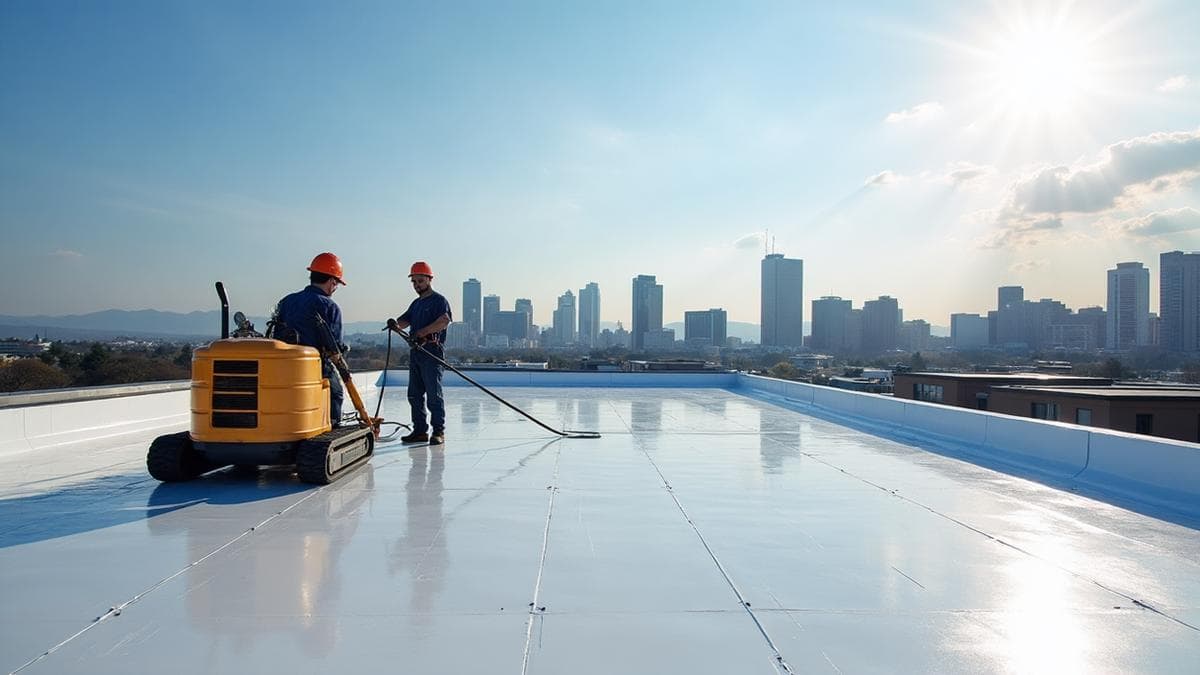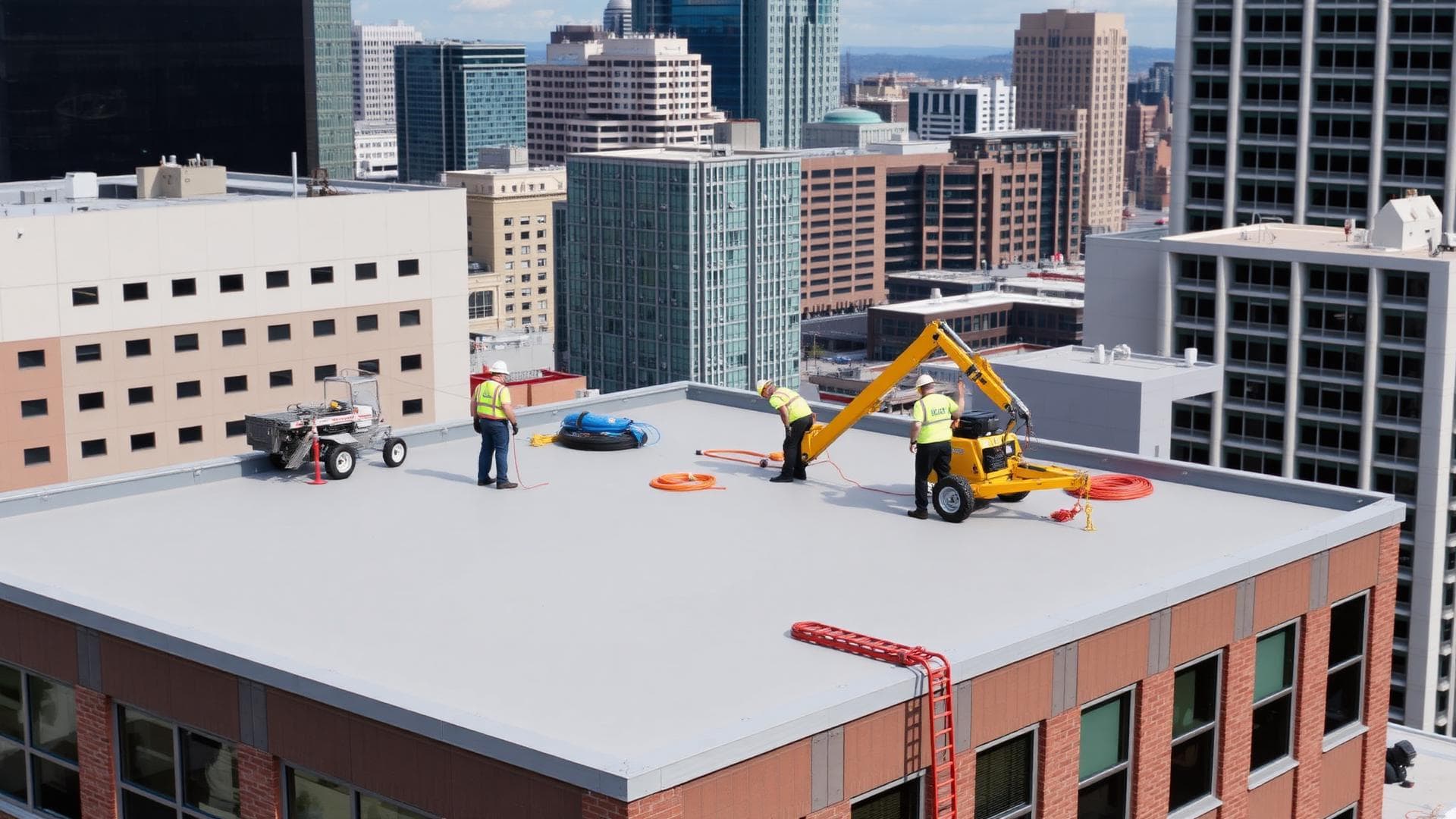
A commercial roof inspection in Aurora examines your building's roofing system for damage, wear, and code compliance. Professional inspectors check membrane integrity, drainage systems, flashing, and structural components to catch problems before they become expensive emergencies. Most Aurora businesses should schedule inspections twice a year and after every major hail event.
Aurora sits in the heart of Colorado's hail belt. Your commercial property takes direct hits from May through September, and a single storm can compromise a flat roof's membrane or puncture metal panels. Front Range wind events stress seams and fasteners. High-altitude UV exposure degrades roofing materials faster than at sea level. These conditions make regular inspections a business necessity, not a luxury.
What Does a Commercial Roof Inspection Cover in Aurora?
A thorough commercial roofing inspection examines every component that keeps water out of your building. Inspectors walk the entire roof surface, checking for:
- Membrane tears, blisters, and punctures on TPO, EPDM, or modified bitumen systems
- Standing water and drainage issues that signal slope problems
- Flashing failures around HVAC units, vents, and parapet walls
- Fastener pull-through and seam separation on metal roofs
- Hail impact damage that may not be visible from the ground
- Interior ceiling stains or moisture intrusion
- Structural concerns like sagging decking or damaged joists
The inspector documents findings with photos and measurements. You receive a written report that prioritizes repairs by urgency and estimates costs. This report becomes your roadmap for maintenance and a critical document if you file an insurance claim.
How Often Should Aurora Businesses Schedule Roof Inspections?
Schedule inspections twice a year at minimum. Spring inspections catch winter freeze-thaw damage and prepare your roof for hail season. Fall inspections identify storm damage and ensure your building is ready for snow load and ice dam conditions.
Add an inspection after any hail event that drops stones larger than one inch. Aurora's location along the I-70 and I-225 corridors puts commercial properties directly in the path of severe storms. A professional roof inspection within days of a storm documents damage while it's fresh and starts the insurance claim process on solid ground.
Older roofs need more frequent attention. If your commercial roof is past the 15-year mark, quarterly inspections help you plan for replacement rather than react to a catastrophic failure during business hours.
What Are the Costs of Skipping Regular Inspections?
A small membrane tear costs a few hundred dollars to patch. Ignore it for six months, and water infiltrates the insulation layer. Now you're replacing insulation, repairing interior damage, and possibly dealing with mold remediation. The bill jumps from hundreds to thousands.
Deferred maintenance compounds. A loose flashing lets water under the membrane. Freeze-thaw cycles expand the damage. By the time you notice ceiling stains, structural wood may be rotting. What started as a $300 repair becomes a $15,000 to $30,000 section replacement.
Insurance companies deny claims when they determine damage resulted from poor maintenance rather than a covered event. Regular inspection reports prove you maintained your roof properly. That documentation protects your claim when hail does hit.
What Should You Look for in a Commercial Roof Inspector?
Choose an inspector who works on commercial buildings daily, not a residential roofer who occasionally checks a strip mall. Commercial systems differ fundamentally from residential shingles. Flat roof and low-slope systems require specific knowledge of membrane types, drainage design, and commercial building codes.
Ask about inspection methods. Infrared thermal imaging detects moisture trapped under membranes that visual inspection misses. Core samples verify insulation condition and deck integrity. A comprehensive inspection uses multiple diagnostic tools.
Request sample reports from past inspections. Good reports include detailed photos, specific location notes, and clear repair priorities. Vague language like "some wear observed" doesn't help you budget or make decisions. You need exact measurements and cost estimates.
Verify the inspector carries commercial general liability insurance and workers compensation. A fall from your roof shouldn't become your liability problem.
How Do Aurora's Climate Conditions Affect Commercial Roofs?
Aurora's 300-plus sunny days deliver intense UV radiation at 5,400 feet elevation. UV breaks down roofing membranes, making them brittle and prone to cracking. TPO and EPDM roofs age faster here than in lower-altitude cities. Inspectors look specifically for UV degradation around seams and fasteners where stress concentrates.
Hail season brings stones that puncture single-ply membranes and dent metal panels. Class 4 impact-resistant materials reduce damage, but no commercial roof is hail-proof. After storms that hit Commerce City, Centennial, or other nearby areas, assume your Aurora property took similar hits.
Winter freeze-thaw cycles stress every roof component. Water enters small cracks, freezes, expands, and widens the opening. Spring inspections catch this damage before summer rains turn small problems into interior floods. Ice dams form when heat escapes through your roof deck, melting snow that refreezes at the eaves. Proper insulation and ventilation prevent ice dams, but inspectors verify these systems work correctly.
What Happens After the Inspection?
You receive a prioritized repair list. Category one items need immediate attention because they're actively leaking or pose safety risks. Category two repairs should happen within 30 to 90 days to prevent escalation. Category three items are maintenance tasks you can schedule during your next budget cycle.
Use the report to get competitive bids. Detailed documentation helps contractors provide accurate estimates rather than rough guesses. If hail damage appears in the report, contact your insurance company immediately. Most policies require prompt notification of damage.
Keep inspection reports in your property files. When you sell the building, these records demonstrate responsible ownership. When you refinance, lenders often require proof of roof condition. Annual inspections create a maintenance history that protects your investment.
Some damage requires emergency roof repair before the inspector finishes the report. Active leaks, large membrane tears, or structural concerns get immediate temporary protection while you arrange permanent fixes.
Can You Inspect Your Own Commercial Roof?
Monthly visual checks from the ground help you spot obvious problems. Look for debris accumulation, standing water after rain, or visible damage to edge metal. Check inside for ceiling stains, water marks, or musty odors that signal hidden leaks.
Walking your own roof is risky and often violates your insurance policy. Commercial roofs have hidden hazards: skylight openings, weak decking, slippery membranes. Falls from commercial buildings cause serious injuries. Leave roof access to insured professionals with proper safety equipment.
Ground-level checks complement professional inspections but don't replace them. You can't see membrane condition, measure ponding depth, or assess structural integrity from below. Twice-yearly professional inspections catch the problems that matter.
Best Roof and Gutter provides comprehensive commercial roof inspections throughout Aurora and the Denver metro area. We document every issue, explain your options, and provide clear cost estimates. Our inspectors know TPO, EPDM, modified bitumen, and metal roofing systems inside and out. We beat any written competitor bid by $100, or donate $100 to a charity of your choice. Call (303) 529-7095 to schedule your free inspection.
How many times has hail hit your neighborhood?
We built a free lookup from the NOAA Storm Events Database: 965 verified hail reports across the Denver metro since 2016, searchable by city.
Check your city's hail history →