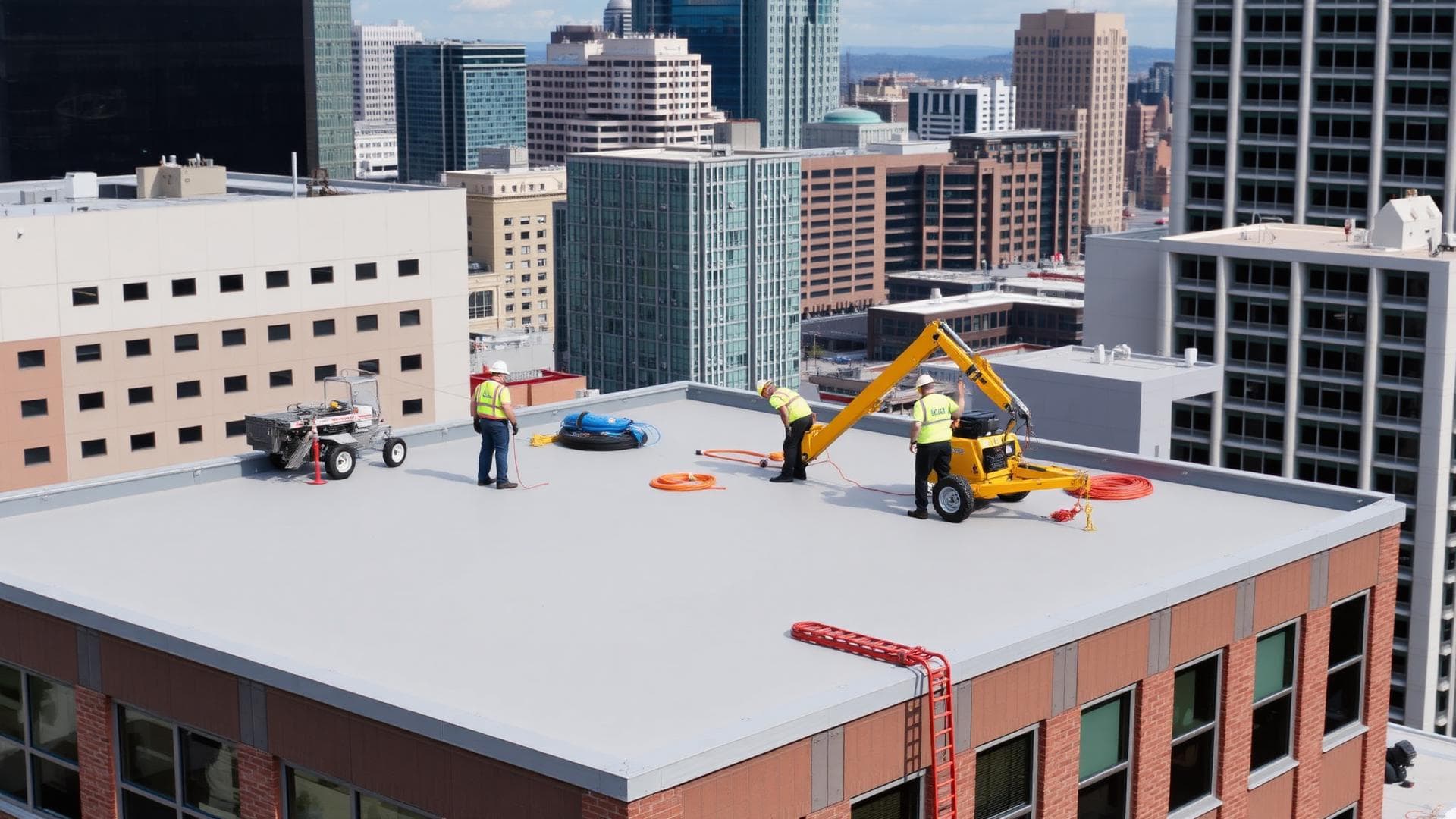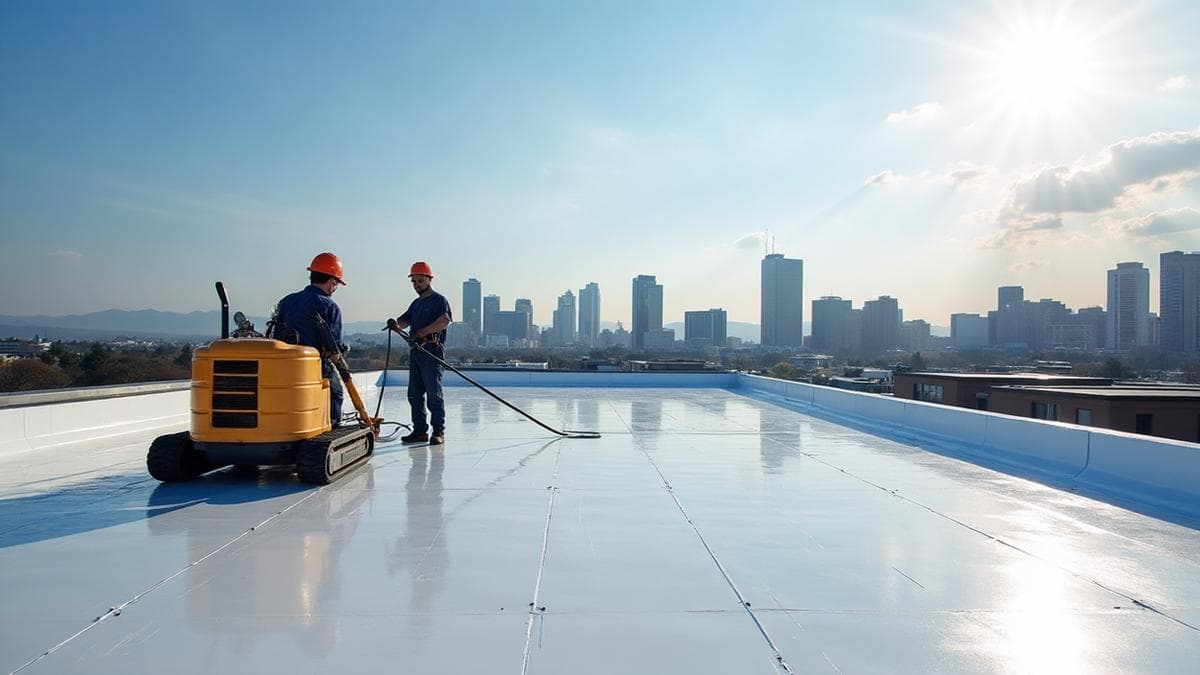
TPO and EPDM are the two most common single-ply membranes for flat and low-slope commercial roofs in Northglenn and across the Denver metro. TPO (thermoplastic polyolefin) costs more but reflects sunlight and heat, cutting cooling bills during Colorado's 300-plus sunny days. EPDM (ethylene propylene diene monomer) is a black rubber membrane that costs less to install and handles freeze-thaw cycles well. Your choice depends on your building's use, budget, and whether you prioritize energy savings or lower upfront cost.
How does TPO perform in Denver's climate?
TPO is a white or light-gray membrane that reflects UV rays and heat. In Denver's high-altitude sun, that reflectivity cuts roof-surface temperatures by 30 to 50 degrees compared to dark membranes. Lower surface temps mean less strain on your HVAC and smaller cooling bills in summer.
TPO is heat-welded at the seams, creating watertight bonds that hold up during Front Range wind events and hailstorms. The welded seams are stronger than glued or taped joints. TPO also resists punctures better than older PVC formulations and stays flexible in cold weather, so it won't crack during Northglenn's winter freeze-thaw cycles.
Expect a TPO roof to last 15 to 25 years with routine maintenance. Hail is the main threat. A severe storm can puncture the membrane or crack the underlying insulation. After any hail event, schedule a roof inspection to catch damage before leaks start.
What are the advantages of EPDM rubber roofing?
EPDM is a black synthetic rubber sheet that has been used on flat roofs since the 1960s. It costs 20 to 40 percent less per square foot than TPO, making it the budget choice for warehouses, storage buildings, and older commercial properties in Commerce City and Northglenn.
EPDM is extremely durable. It handles temperature swings from subzero winter nights to 90-degree summer days without becoming brittle. The material resists ozone and UV damage, though the black surface absorbs heat rather than reflecting it. That absorbed heat can raise cooling costs in summer, but it also helps melt snow faster in winter.
Installation is faster than TPO because EPDM can be fully adhered, mechanically fastened, or ballasted with river rock. Seams are sealed with liquid adhesive or tape rather than heat-welding. Those seams are the weak point: adhesive can fail over time, especially if the roof wasn't cleaned properly before installation. A well-installed EPDM roof lasts 20 to 30 years, but poor seam work can lead to leaks within five years.
If you choose EPDM, plan for regular seam inspections. Small repairs are easy and inexpensive if you catch them early. Our flat roof services include seam resealing and patch work.
How much does each membrane cost in the Denver area?
Material and labor costs vary by building size, roof complexity, and whether you need to remove an old roof first. As a rough guide, EPDM runs $4 to $8 per square foot installed, while TPO runs $5.50 to $10 per square foot. A 5,000-square-foot commercial roof in Northglenn might cost $20,000 to $40,000 for EPDM or $27,500 to $50,000 for TPO.
Those ranges include tear-off of one layer of old membrane, new insulation, the membrane itself, and flashing. Add 10 to 20 percent if your roof has multiple penetrations (HVAC curbs, vents, drains) or if the deck needs repairs. Costs also rise if you want thicker insulation or a thicker membrane (EPDM comes in 45-mil and 60-mil; TPO in 45-mil, 60-mil, and 80-mil).
Energy savings tip the long-term math toward TPO. A reflective white TPO roof can cut summer cooling costs by 10 to 30 percent compared to black EPDM. Over a 20-year lifespan, those savings can offset the higher upfront cost, especially on buildings with heavy air-conditioning use.
Check our cost guide for more detail on flat-roof pricing and what drives the numbers up or down.
Which membrane handles hail and wind better?
Front Range hail season runs roughly May through September, and Northglenn sees its share of storms. Both TPO and EPDM can be punctured by large hail (one inch or bigger). Thicker membranes and impact-resistant cover boards help, but no single-ply roof is hail-proof.
TPO's heat-welded seams give it an edge in wind resistance. Welded seams won't peel or separate the way adhesive-bonded EPDM seams can. During a downslope wind event, a poorly adhered EPDM edge can lift and tear. Fully adhered or mechanically fastened TPO systems are less likely to blow off.
After any severe storm, get a professional inspection. Hail damage often shows as small punctures or bruising that won't leak immediately but will fail within a year or two. We offer hail damage repair and work directly with insurance adjusters to document losses and get claims paid.
What about warranties and maintenance?
Manufacturer warranties for both TPO and EPDM typically cover material defects for 10 to 20 years. Labor warranties depend on the installer. We provide a workmanship warranty on all commercial roofing installations, so if a seam fails or a flashing leaks due to installation error, we fix it at no charge.
Routine maintenance extends the life of either membrane. Walk your roof twice a year (spring and fall) to clear drains, remove debris, and check seams and flashings. Look for ponding water that sits longer than 48 hours after a rain. Ponding accelerates membrane aging and can hide punctures. If you spot a problem, call for a repair before a small issue becomes a full tear-off.
EPDM seams need more attention than TPO seams. Plan to reseal EPDM seams every 5 to 10 years, especially around roof penetrations. TPO seams rarely need touch-ups unless they were poorly welded during installation.
How do you choose between TPO and EPDM for your building?
Pick TPO if energy efficiency matters, if your building has high cooling loads, or if you want the strongest seam performance. The white surface also keeps the roof cooler, which can extend the life of underlying insulation and the roof deck. TPO is the better choice for office buildings, retail centers, and any climate-controlled space in Denver or Thornton.
Pick EPDM if upfront cost is the priority, if the building is unconditioned (warehouse, storage), or if you need a proven, low-maintenance membrane. EPDM's track record is longer than TPO's, and a well-installed EPDM roof can outlast a poorly installed TPO roof. EPDM also works well on roofs with complex shapes or lots of penetrations, because it's easier to cut and fit in the field.
Either way, installation quality matters more than the membrane itself. A bad TPO install will fail faster than a good EPDM install. Hire a contractor who specializes in commercial flat roofs and who will pull the required municipal permits in Northglenn or wherever your building sits.
Ready to replace or repair your flat roof?
Best Roof and Gutter installs and repairs both TPO and EPDM membranes on commercial buildings across the Denver metro. We'll inspect your existing roof for free, explain your options, and give you a written estimate with no pressure. We beat any written competitor bid by $100, or donate $100 to a charity of your choice. Call (303) 529-7095 or visit bestroofandgutter.com to schedule your inspection. Our team is available Monday through Friday 7 AM to 7 PM and Saturday 8 AM to 5 PM.