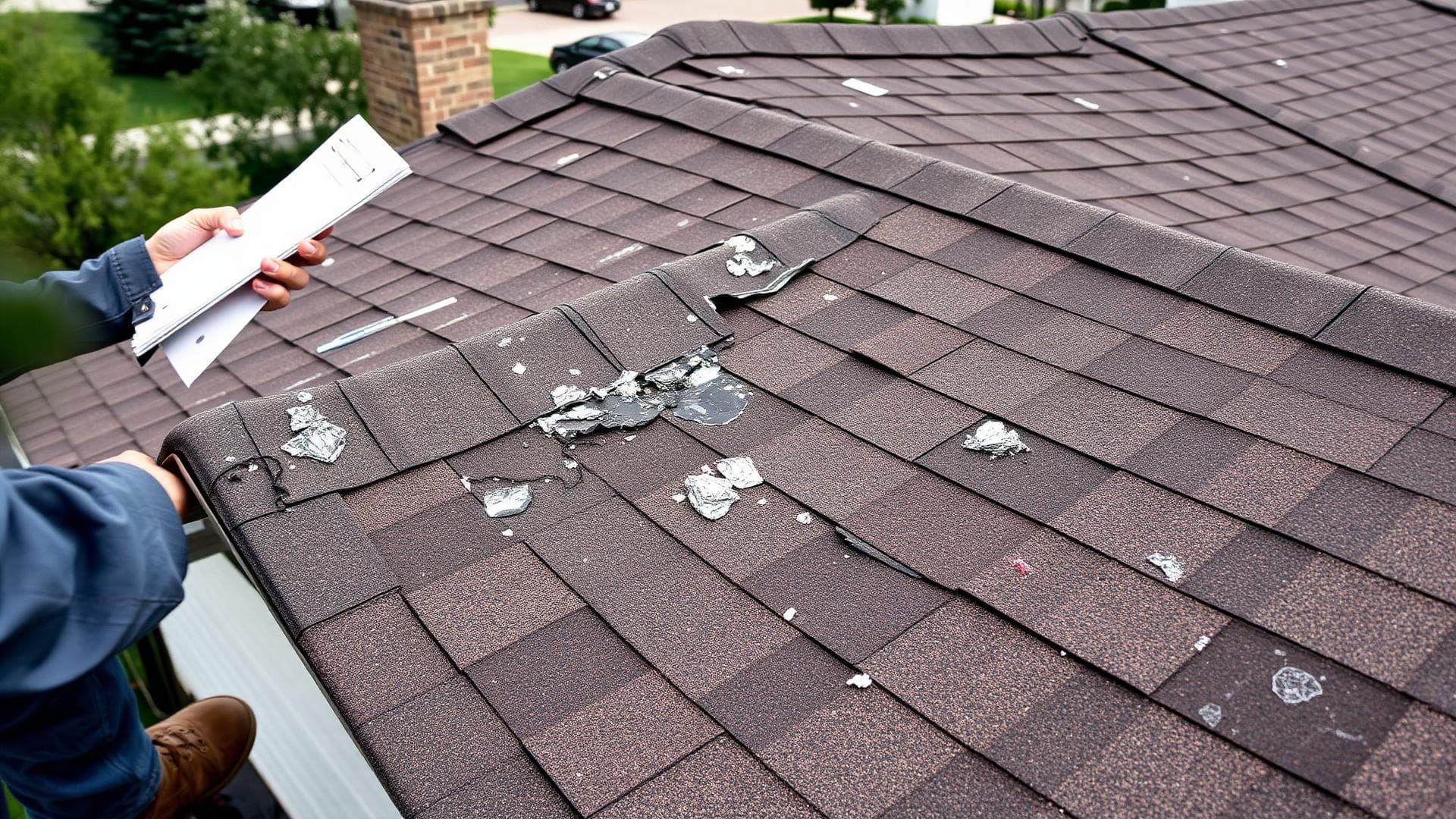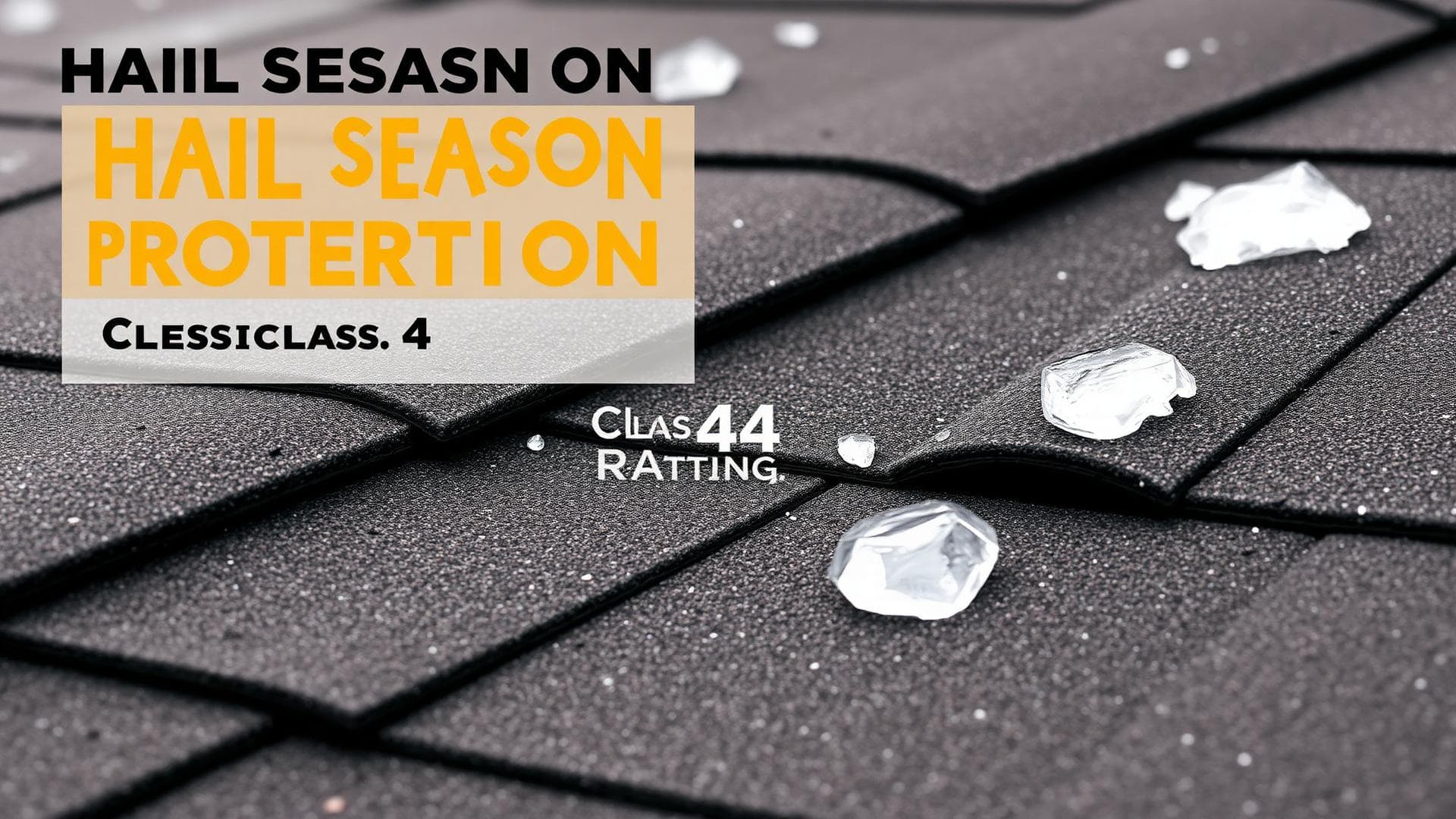
Hail damage creates random, circular dents on shingles with exposed fiberglass or missing granules, while normal wear shows uniform fading and gradual granule loss across the entire roof. After a Centennial hailstorm, inspect your roof for bruised shingles that feel soft when pressed, dented metal vents and flashing, and fresh dings in your gutters and downspouts.
What Does Hail Damage Actually Look Like on Shingles?
Hail hits create distinct circular or oval impacts. You will see dark spots where the protective granules are knocked off, exposing the black asphalt mat or fiberglass underneath. Press gently on these spots. Damaged shingles feel soft or spongy because the impact crushed the underlying mat.
The damage pattern is random, not uniform. A May hailstorm in Centennial might pummel the west-facing slope hard while barely touching the east side. Normal aging affects the whole roof evenly. Front Range hail season runs roughly May through September, so inspect after every severe storm during those months.
Look for these specific hail markers:
- Circular bruises with missing granules in random clusters
- Shiny black spots where asphalt shows through
- Soft, spongy areas when you press the shingle surface
- Cracked or split shingles at impact points on older roofs
- Damage concentrated on slopes facing the storm direction
If you see this pattern, schedule a professional roof inspection before filing a claim. Insurance adjusters look for these same markers.
How Does Normal Roof Wear Differ from Storm Damage?
Normal wear happens slowly and evenly. Colorado's 300-plus sunny days and high-altitude UV break down asphalt shingles over time. You will see uniform granule loss across the entire roof, not random spots. The color fades gradually. Edges might curl slightly as the shingles age.
Centennial roofs also face freeze-thaw cycles in winter. Ice forms under shingles, expands, then melts. Over years, this loosens the seal strips and lifts shingle edges. This process is gradual and affects the whole roof, especially north-facing slopes that stay cold longer.
Normal wear signs include:
- Even granule loss with no dark impact spots
- Uniform color fading across all slopes
- Curled or cupped shingle edges from age
- Cracked caulk around flashing and vents
- Granules collecting evenly in gutters over time
A 15-year-old asphalt roof in Centennial will show wear. That is expected. Hail damage is sudden, localized, and creates the bruised look described above. If you are unsure, a hail damage specialist can walk your roof and document the difference.
What Other Roof Components Show Hail Damage?
Shingles are not the only place to check. Hail dents metal roof vents, pipe boots, and flashing. Walk around your house and look at these components from the ground. Fresh dings on galvanized metal vents are a clear hail signature.
Check your gutters and downspouts. Hail leaves fresh dents on aluminum gutters. These dings are shiny and random, not the uniform weathering you see on old gutters. Downspout elbows often show multiple impacts.
Inspect these areas:
- Metal roof vents and turbine vents for fresh dents
- Pipe boot collars and flashing for dings
- Gutters and downspouts for random impact marks
- Satellite dishes and roof-mounted equipment
- Window screens and siding for pockmarks
Hail that dents metal will damage shingles. If you see fresh dings on vents or gutters after a storm, your shingles likely took hits too. Document everything with photos before calling for an inspection.
When Should You Call a Professional Inspector?
Call within a few weeks of a known hailstorm. Most homeowners insurance policies in Colorado give you one year to file a claim, but waiting makes documentation harder. Granules wash away. Rain and wind can cause secondary damage that complicates the claim.
A professional inspector climbs the roof safely and documents damage with photos and measurements. They check every slope, all flashing, and the underlayment condition. This report becomes your evidence for the insurance claim.
Best Roof and Gutter offers a free roof inspection after storms. We serve Centennial, Aurora, Highlands Ranch, and the entire Denver metro. Our inspectors document hail damage and help you understand whether you have a valid claim. We work directly with insurance adjusters to make sure nothing gets missed.
Call a professional if you notice:
- Fresh dents on metal vents or gutters after a storm
- Dark spots or soft areas on shingles
- Neighbors filing hail claims in your area
- A recent severe weather alert for large hail
- Any uncertainty about what you are seeing
Do not wait. Centennial saw significant hail events in recent years, and many homeowners discovered damage months later when leaks started. Early inspection protects your home and preserves your claim timeline.
How Much Does Hail Damage Repair Cost in Centennial?
Cost depends on damage extent and roof size. A typical Centennial home might need partial shingle replacement on the most-damaged slopes, or a full roof if hail hit hard. Insurance usually covers storm damage minus your deductible.
Expect these ranges for common repairs:
- Partial shingle replacement on one or two slopes: $2,500 to $6,000
- Full asphalt shingle roof replacement: $8,000 to $18,000 depending on home size
- Metal flashing and vent repairs: $300 to $1,200
- Gutter replacement if severely dented: $800 to $2,500
These are estimates. Every home is different. Your insurance adjuster will assess the damage and issue a settlement. Best Roof and Gutter works with your carrier to document everything and make sure you get a fair payout.
We also offer the Best Price Promise: we beat any written competitor bid by $100, or donate $100 to a charity of your choice. Our storm damage repair work comes with a workmanship warranty, and we install Class 4 impact-resistant shingles that can qualify you for a homeowners insurance premium discount.
What Happens If You Ignore Hail Damage?
Ignored hail damage leads to leaks. Those soft, bruised spots on shingles let water through during the next rainstorm. Water seeps under the shingle, soaks the underlayment, and eventually drips into your attic. By the time you see a ceiling stain, the decking might be rotted.
Insurance companies also have claim deadlines. Most Colorado policies give you one year from the storm date. Miss that window and you pay for repairs out of pocket. Adjusters also scrutinize late claims more carefully, looking for reasons to deny coverage.
Hail damage does not heal. It gets worse. Freeze-thaw cycles in Centennial winters expand those cracks. Wind lifts damaged shingles. A small problem becomes a full roof replacement instead of a repair.
Protect your investment. After any severe hailstorm in Centennial or nearby Parker, Castle Rock, or Lone Tree, get a professional inspection. Best Roof and Gutter has inspected hundreds of roofs across the Denver metro and earned a 4.3-star rating from 123 reviews on Google and Yelp. We know what adjusters look for and how to document damage properly.
Call us at (303) 529-7095 to schedule your free inspection. We will check your roof, gutters, and all metal components, then give you a clear answer about whether you have hail damage or normal wear. No pressure, just honest assessment from a local Centennial roofing team.
How many times has hail hit your neighborhood?
We built a free lookup from the NOAA Storm Events Database: 965 verified hail reports across the Denver metro since 2016, searchable by city.
Check your city's hail history →