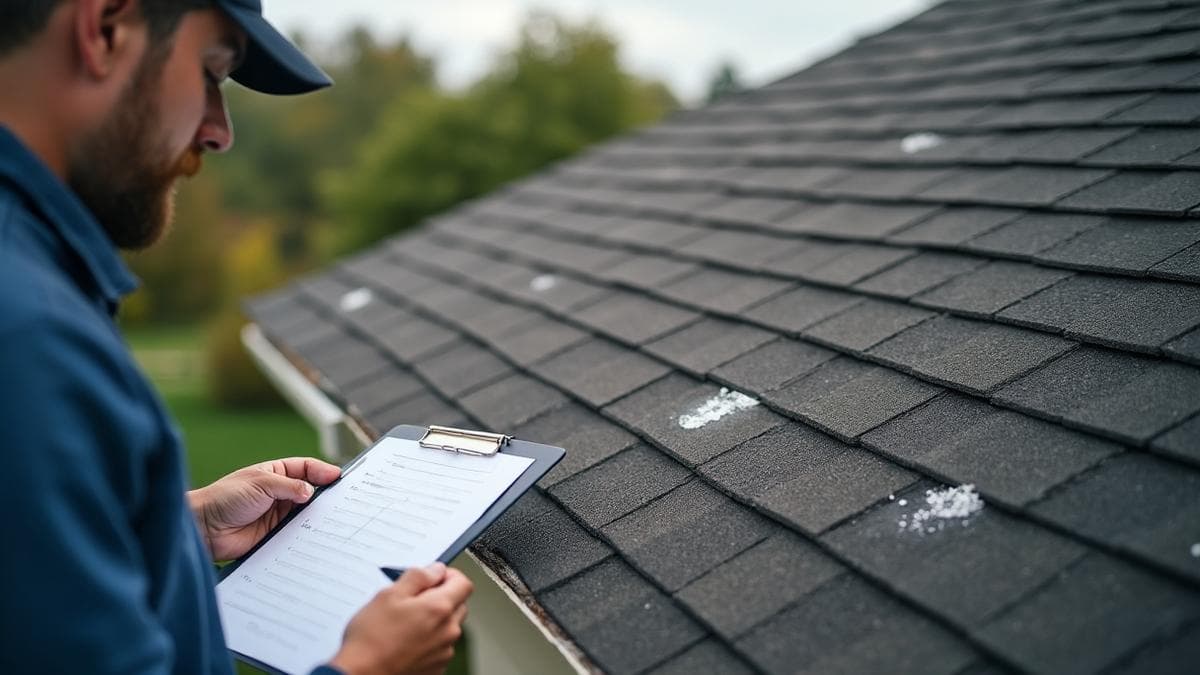
Insurance adjusters miss critical hail damage on Centennial roofs more often than homeowners realize. The most commonly overlooked items are collateral damage to gutters and vents, bruising on the north-facing slope, and functional damage that shows up months after the storm. A thorough roof inspection by a local contractor catches what a 20-minute adjuster visit does not.
Why Do Adjusters Miss Damage in the First Place?
Adjusters work fast. They carry 15 to 30 claims at a time during Front Range hail season, which runs May through September. A typical inspection lasts 15 to 25 minutes. They photograph obvious hits, count a test square, and leave.
That speed creates blind spots. Adjusters focus on the south and west slopes because those catch the most sun and show wear first. They rarely spend equal time on north-facing sections, where bruising hides in shade and moss. They check the field of the roof but skip the edges, valleys, and penetrations where hail concentrates energy.
Many adjusters also work from photographs taken at ground level or from a drone. A camera 60 feet away cannot capture the subtle mat compression and granule loss that defines a bruise. If the adjuster never climbs the roof, functional damage goes unrecorded.
What Collateral Damage Gets Ignored?
Hail does not stop at shingles. The same storm that dents your roof also batters everything else up there. Adjusters routinely miss:
- Gutters and downspouts. Dents in seamless gutters are cosmetic until they crack the seam or create a low spot that pools water. Adjusters photograph the roof and walk away without checking the gutter line.
- Roof vents and turbines. Plastic vent caps crack. Metal turbine fins bend. A cracked vent lets water into your attic. Adjusters see it as a separate maintenance item, not storm damage.
- Chimney flashing and crickets. Hail dimples the metal and loosens the seal. The leak appears six months later during a spring thaw. By then, the claim is closed.
- Skylight frames and solar panel mounts. These are expensive to replace and easy to overlook if the adjuster is focused on shingle counts.
In Centennial and Highlands Ranch, where homes often have complex rooflines and multiple penetrations, collateral damage adds up. A complete hail damage repair includes all of it.
How Does Bruising Slip Through?
Bruising is compression damage. Hail hits an asphalt shingle and crushes the mat without tearing the surface. You see a dark spot or a small divot. The granules are intact, so the adjuster marks it as cosmetic.
That is wrong. A bruise fractures the fiberglass mat inside the shingle. The shingle loses its flexibility. It cracks under freeze-thaw cycles. Colorado's 300-plus sunny days and high-altitude UV finish the job. A bruised roof fails years early.
Adjusters miss bruising because:
- It is hard to photograph. A bruise shows best in raking light, early morning or late afternoon. Adjusters arrive at noon.
- It blends with aging. On a 12-year-old roof, bruises look like worn spots. The adjuster assumes wear and denies the claim.
- It hides on north slopes. Moss and shade obscure the divots. The adjuster spends 90 seconds on that side and moves on.
A local roofer walks the entire roof in good light and marks every bruise. That documentation supports your insurance claim.
What Functional Damage Shows Up Later?
Functional damage is anything that shortens the roof's lifespan or lets water in. It includes:
- Cracked sealant strips. Hail breaks the adhesive bond between shingle courses. Wind lifts the tabs. The adjuster sees no missing shingles, so no damage is recorded. Three months later, a Chinook wind peels off half a slope.
- Fractured ridge caps. Ridge caps take direct hits. They crack along the fold. The crack is invisible from the ground. Water seeps in during the next storm.
- Damaged drip edge. Hail bends the metal. The bend creates a gap. Ice dams form in that gap during winter freeze-thaw cycles. The adjuster never checked the edge.
- Granule loss in valleys. Valleys concentrate runoff. Hail strips granules there first. The adjuster photographs the field and misses the valley entirely.
Functional damage is harder to document than a dent, but it is covered. Colorado policies pay for damage that reduces the roof's ability to do its job. You just have to prove it exists before the adjuster closes the file.
How Can You Protect Your Centennial Hail Claim?
Get your own inspection before the adjuster arrives. A local contractor who knows Centennial's building codes and Front Range hail patterns will find what the adjuster misses. That inspection costs nothing if you use it to file a claim.
Walk the roof with the adjuster if you can do so safely. Point out damage in real time. Ask questions. If the adjuster skips the north slope, ask why. If they ignore the gutters, ask whether collateral damage is covered. Their answers go into the claim file.
Take your own photographs. Shoot close-ups of every bruise, every dent, every cracked vent. Time-stamp them. If the claim is denied, those photos are your evidence for the appeal.
Document everything in writing. After the adjuster leaves, send an email summarizing what was inspected and what was not. If they missed the chimney flashing, say so. If they spent 30 seconds on the north slope, note the time. That email creates a record.
Finally, read your policy. Most Colorado homeowners have replacement-cost coverage, but the adjuster's initial estimate is actual cash value. You receive the depreciation holdback only after the work is done. Know what you are entitled to before you sign anything.
What Happens If the Adjuster's Estimate Is Too Low?
You can challenge it. Colorado law allows you to hire a public adjuster or use your contractor's documentation to request a re-inspection. The insurance company must respond in writing.
Most disputes are resolved with a supplement. The adjuster returns, reviews the new evidence, and adds the missed items to the estimate. If that fails, you can invoke the appraisal clause in your policy. Each side hires an appraiser. The appraisers agree on the damage, and the insurance company pays.
A contractor who handles insurance claims regularly knows this process. They document everything, write the supplement request, and attend the re-inspection. That support costs you nothing. The contractor is paid from the insurance proceeds, and you get a complete repair.
Ready to Get Your Centennial Roof Inspected?
Best Roof and Gutter offers free roof inspections in Centennial, Aurora, and across the Denver metro area. We climb every slope, photograph every bruise, and document all collateral damage. If we find hail damage, we help you file the claim and work directly with your adjuster. Our workmanship warranty covers the installation, and we beat any written competitor bid by $100 or donate $100 to a charity of your choice. Call us at (303) 529-7095 to schedule your free inspection.
How many times has hail hit your neighborhood?
We built a free lookup from the NOAA Storm Events Database: 965 verified hail reports across the Denver metro since 2016, searchable by city.
Check your city's hail history →